
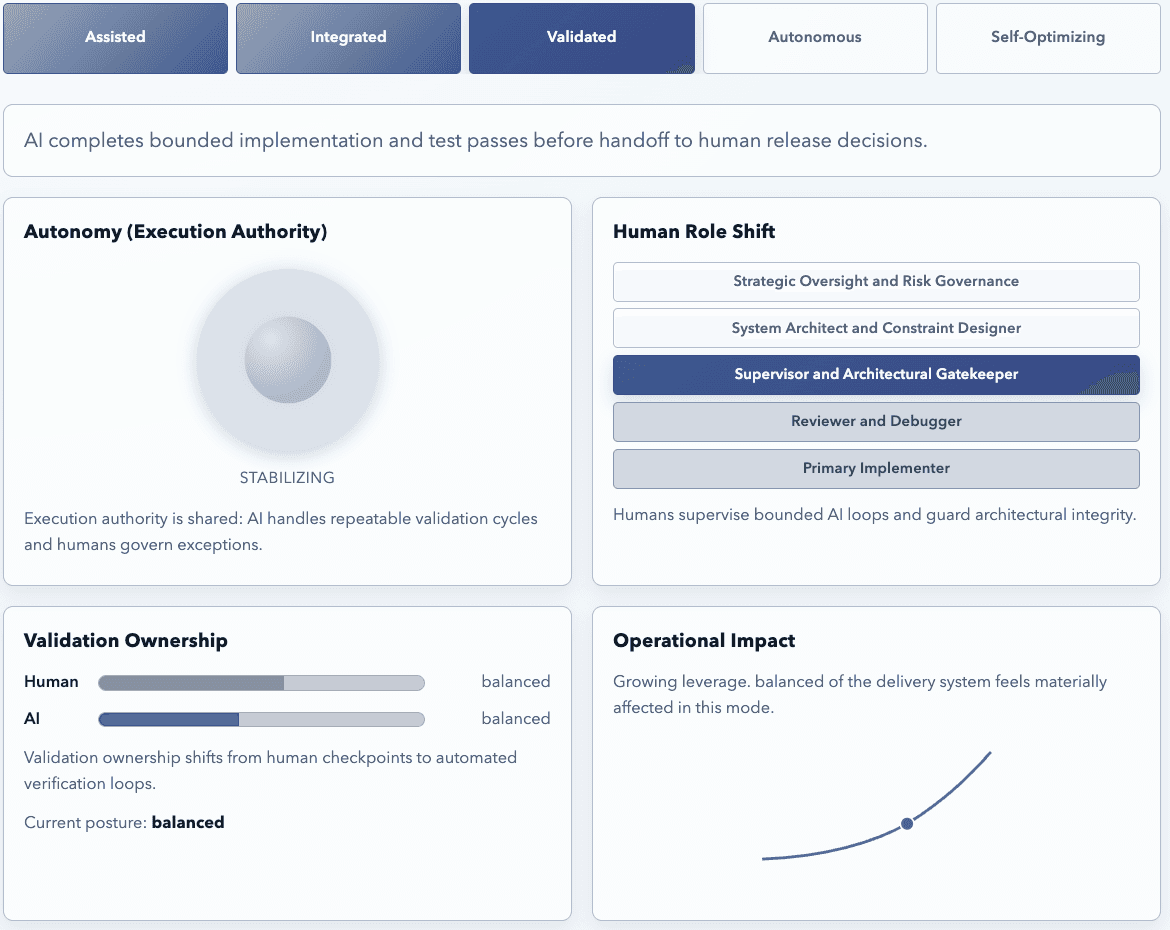
Map AI autonomy and execution authority from assisted engineering to self-optimizing operations with the Autonomy Gradient maturity model.
Founder
Screenshots
About
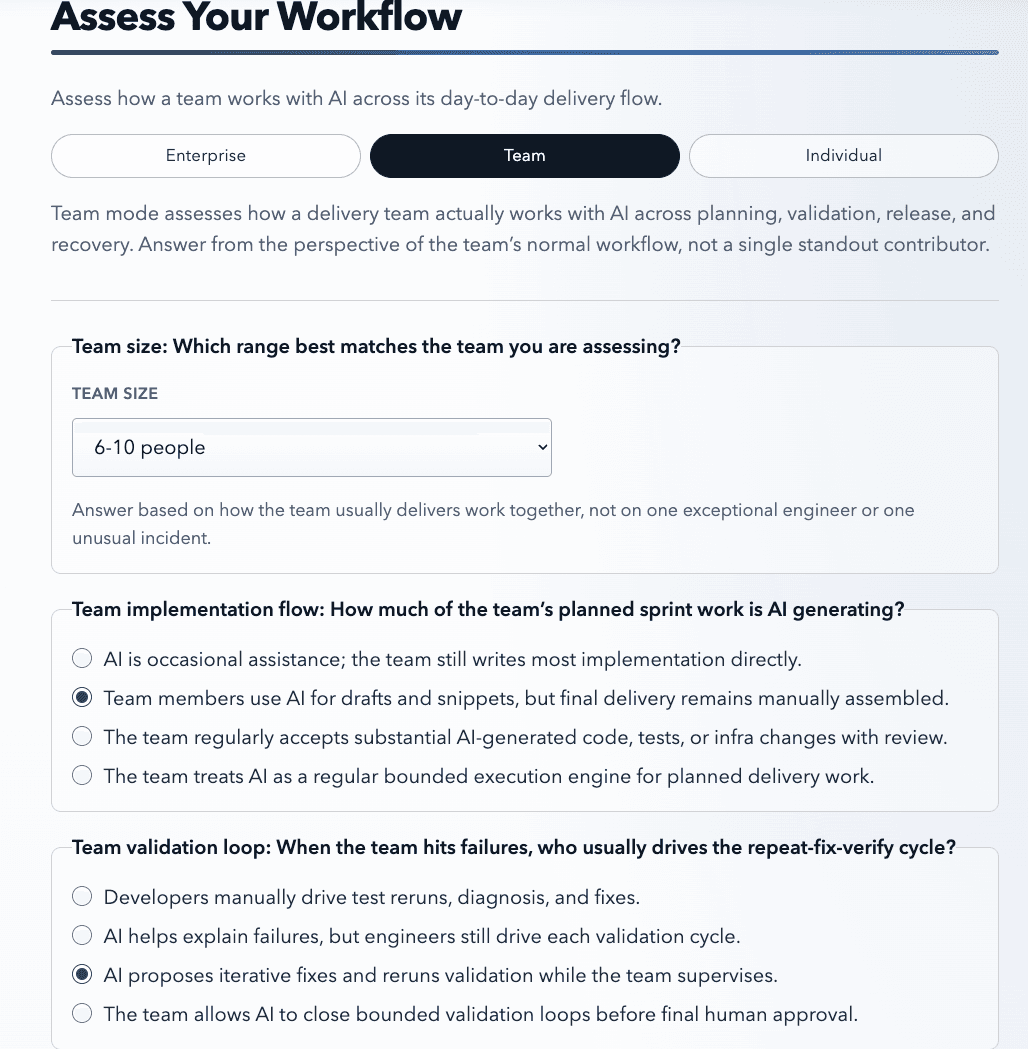
Navigating the rapidly evolving landscape of Artificial Intelligence can often feel like trying to chart an unknown territory. You know you want to leverage AI for maximum impact, but understanding exactly *how* autonomous your systems are, or *should* be, is a critical challenge. That is precisely where the Autonomy Gradient model comes in. This isn't just another abstract framework; it's a practical, visual tool designed to bring clarity to your AI implementation journey. Imagine having a clear roadmap that defines the spectrum of AI execution authority, moving seamlessly from simple assisted engineering tasks—where human oversight is paramount—all the way up to fully self-optimizing operations that require minimal intervention. This model helps you pinpoint exactly where your current AI initiatives sit on this spectrum, allowing you to set realistic, measurable goals for future development and deployment. It transforms the vague concept of AI maturity into a tangible, actionable metric that everyone on your team, from engineering to executive leadership, can understand and align with.
By visualizing this gradient, you gain the power to strategically allocate resources and define the necessary guardrails for each stage of autonomy. Are your current systems designed for collaborative assistance, or are you ready to push toward fully autonomous decision-making in specific domains? The Autonomy Gradient provides the language and structure to answer these tough questions confidently. For developers and technical teams, this means building systems with the right level of embedded safety checks and feedback loops appropriate for their assigned level of authority. For business leaders, it means understanding the true operational risk and potential return on investment associated with increasing automation. It helps bridge the common gap between technical capability and business readiness, ensuring that as your AI gains more power, your governance and understanding grow in lockstep. This structured approach prevents over-engineering in low-risk areas and ensures you aren't deploying insufficiently tested systems into high-stakes environments.
Ultimately, adopting the Autonomy Gradient is about taking control of your AI destiny rather than simply reacting to technological progress. It empowers you to systematically mature your AI applications, ensuring that every step toward greater autonomy is deliberate, documented, and aligned with your organizational strategy. Whether you are refining existing machine learning pipelines or architecting entirely new intelligent operations, this model serves as your essential compass. It allows you to benchmark your progress against industry standards while tailoring the pace of adoption to your unique operational needs, leading to more reliable, trustworthy, and ultimately, more valuable AI integration across your entire enterprise. It’s the clarity you need to move beyond experimentation and into confident, scalable AI execution.