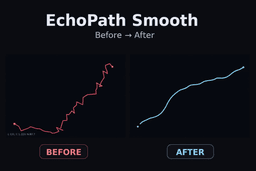
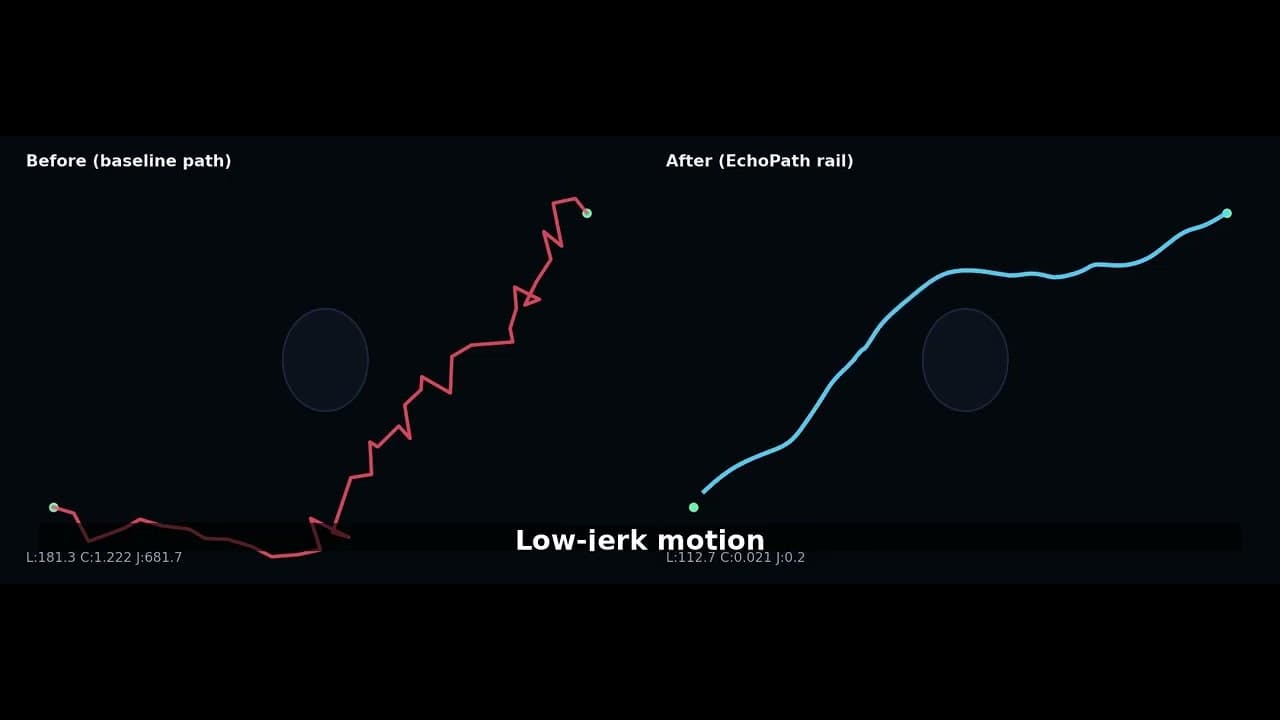
EchoPath Smooth converts raw planner output (NavMesh, A*, custom waypoints) into smooth, stable motion rails—reducing sharp turns and jitter in dynamic scenes. Built for XR locomotion, cameras, and AI agents where “correct” movement still feels wrong. Smooths NavMesh, A*, and custom waypoint paths Reduces jerk/spikes and sharp turns Helps movement stay stable across replans
Founder
Screenshots
About
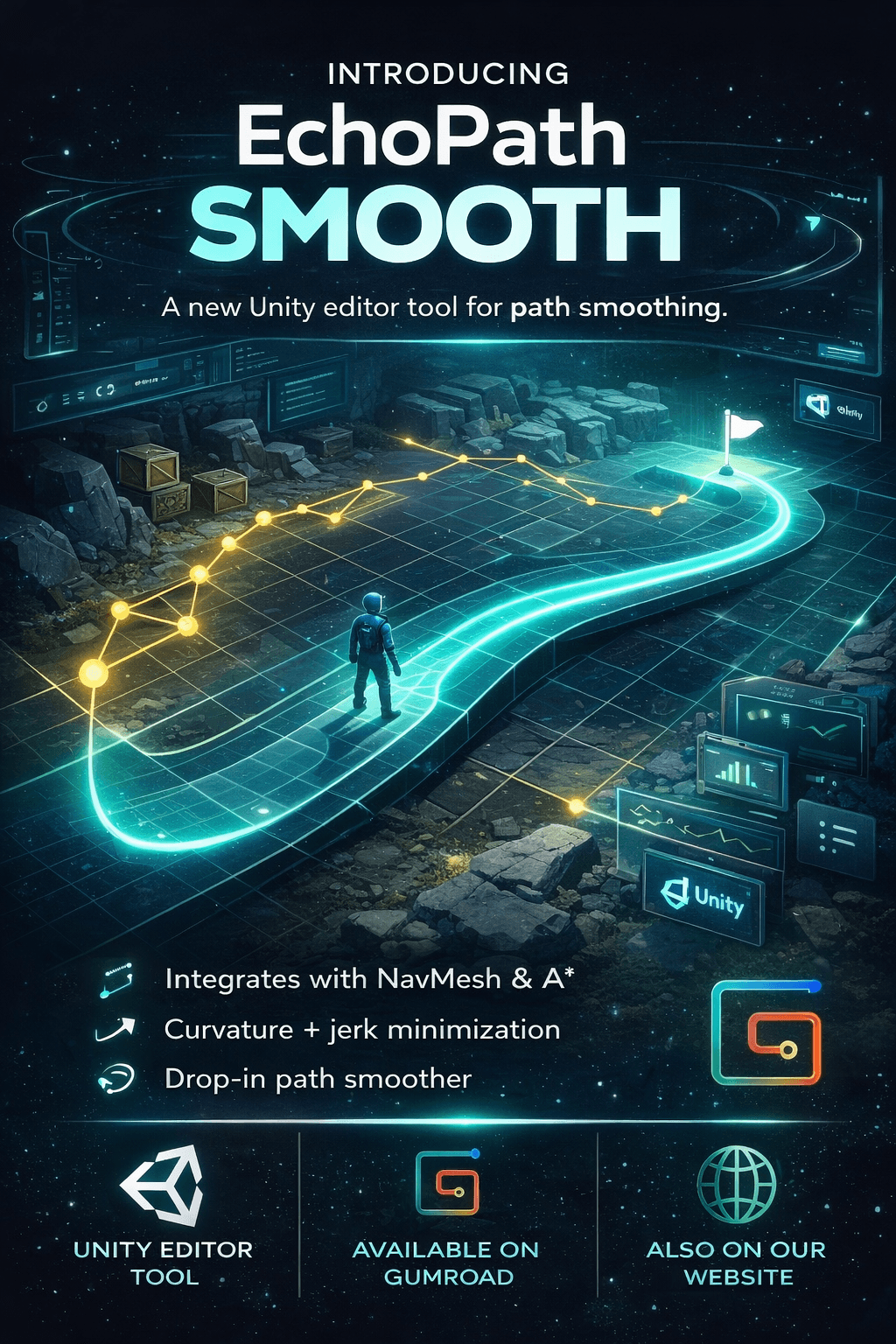
Have you ever noticed how perfectly calculated paths in your game or simulation look jarringly unnatural? That crisp, angular movement, often the result of standard pathfinding algorithms like A* or basic NavMesh outputs, can completely break immersion, especially when dealing with sensitive applications like virtual reality locomotion or precise camera movements. Introducing EchoPath Smooth, the essential tool designed to bridge the gap between mathematically correct navigation and genuinely fluid, human-like motion. This isn't just another layer of post-processing; it’s a sophisticated curvature-bounded path smoothing engine engineered specifically to take those raw, jagged waypoints generated by your existing navigation systems and transform them into elegant, stable motion rails. Imagine your XR avatars gliding effortlessly around corners instead of snapping into a new direction, or your AI companions moving with a believable grace that keeps players engaged. EchoPath Smooth ensures that the underlying navigation logic remains sound while delivering the visual and physical smoothness that defines a polished user experience. It directly addresses the common frustration where the path is technically right, but the resulting movement feels fundamentally wrong.
EchoPath Smooth excels in dynamic environments where replanning is frequent. When an agent encounters an obstacle or the environment shifts, the navigation system recalculates a new route. In many systems, this replan results in an immediate, noticeable jerk or sudden change in velocity as the agent switches to the new set of waypoints. Our technology intelligently manages these transitions, ensuring that even when the underlying path is updated, the motion remains stable and continuous. This stability is crucial for maintaining comfort in VR, preventing motion sickness caused by unexpected accelerations, and ensuring that critical systems like guided cameras or complex robotic simulations maintain their intended trajectory without disruptive spikes. By focusing on bounded curvature, we guarantee that the smoothed path respects the physical limitations of the moving entity, resulting in movement that is not only smooth but also physically plausible and reliable across all your complex navigation needs, whether you are using standard Unity NavMesh, A*, or even feeding it custom waypoint sequences.