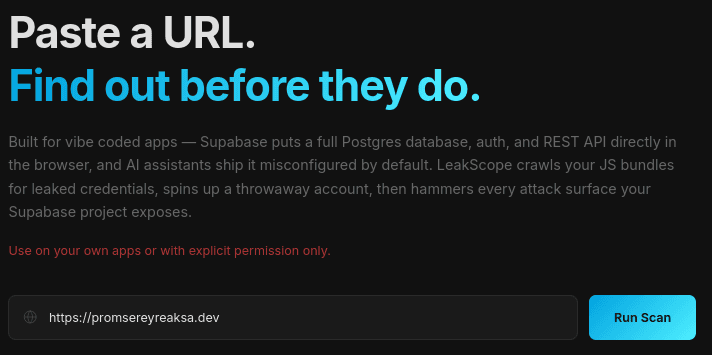
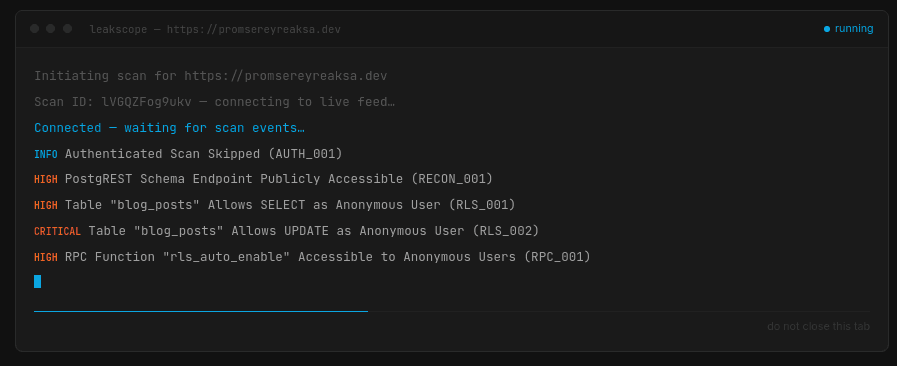
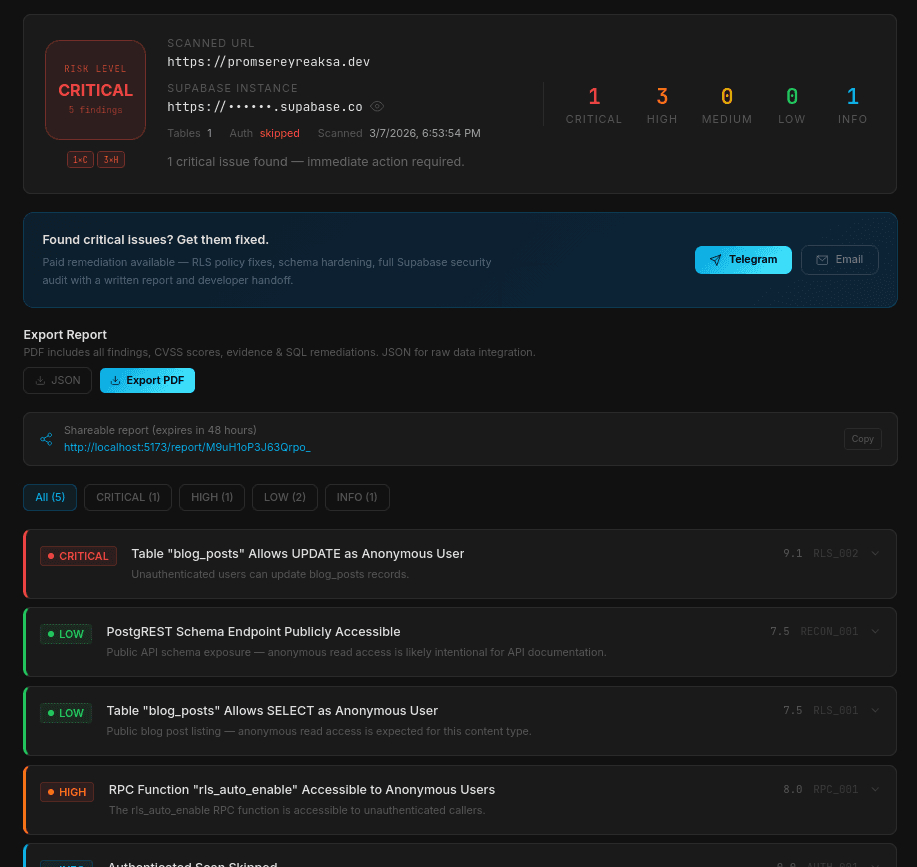
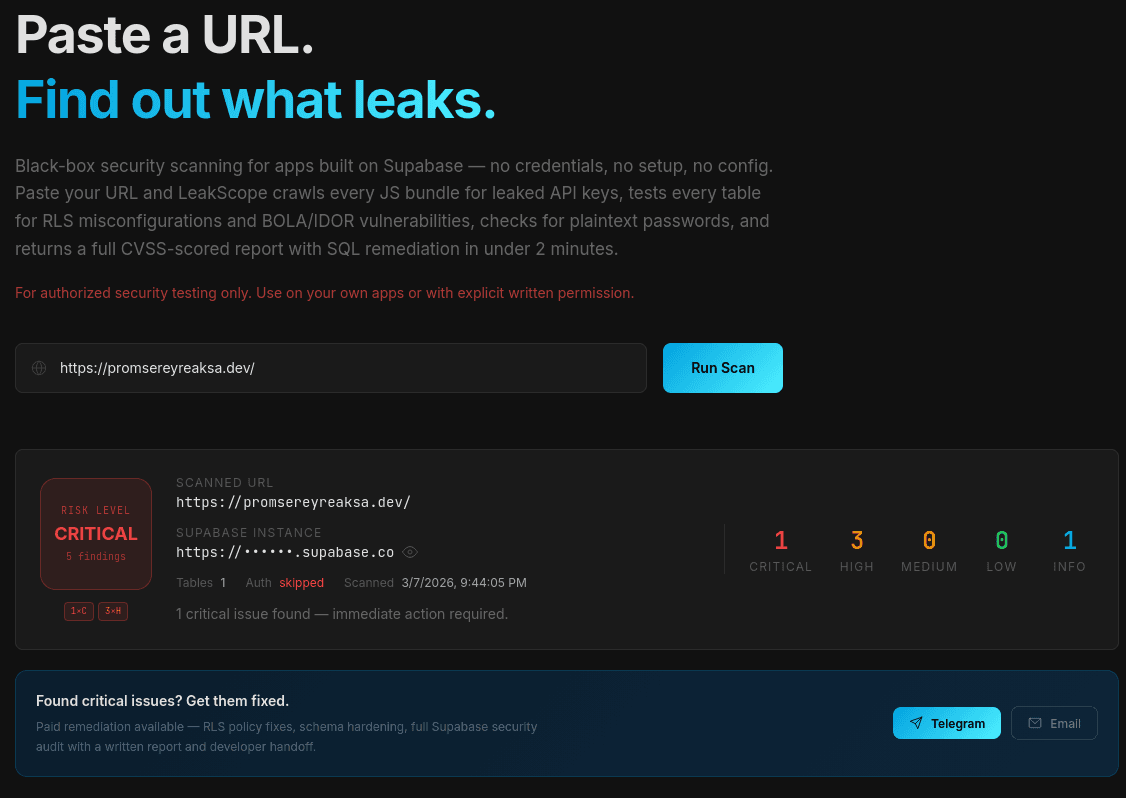
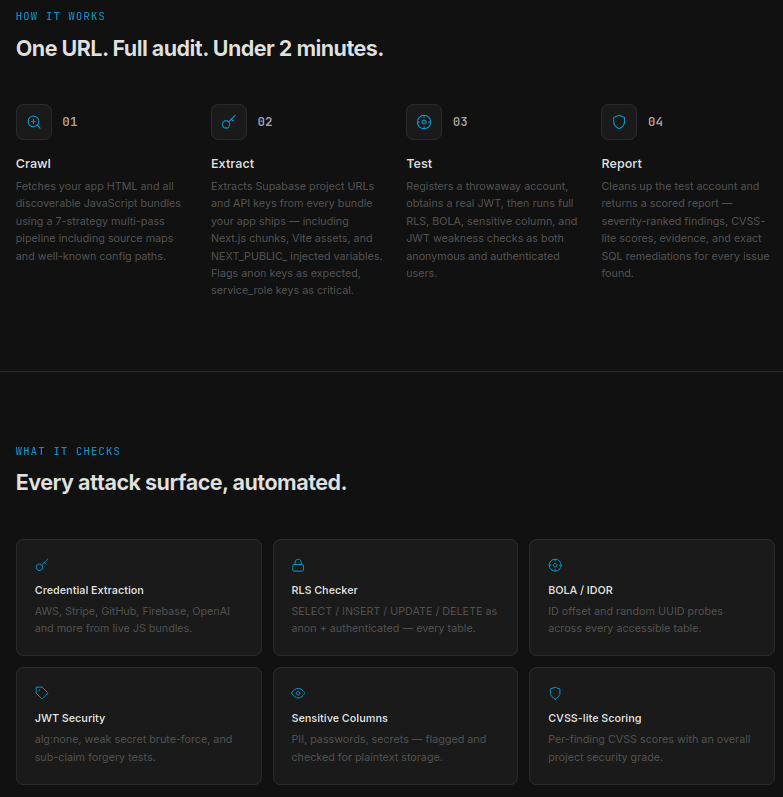
LeakScope scans live websites for Supabase data exposure and misconfigurations. Paste a URL and it checks for: • public Supabase tables • weak or misconfigured RLS policies • exposed API keys in JS • source maps in production • missing security headers The goal is simple: show what an anonymous user could access from the outside.see more
Founder
Screenshots
About
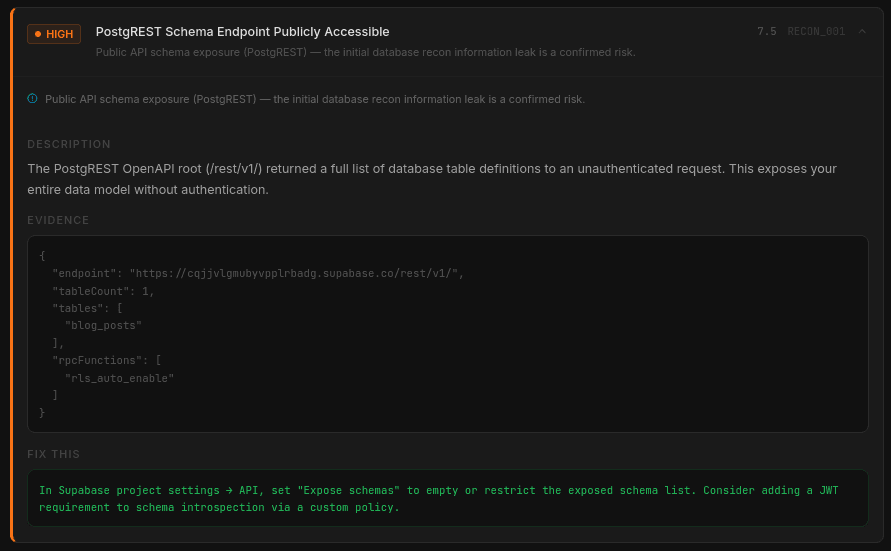
In today's fast-paced development environment, launching a new application often means integrating powerful backend services like Supabase. While these tools offer incredible speed and flexibility, they also introduce potential security blind spots if not configured perfectly. That is where LeakScope steps in, acting as your vigilant, automated security partner. This essential tool is designed with one singular, critical mission: to show you exactly what an anonymous, unauthorized user can see on your live website right now. Forget the guesswork and the anxiety of manual audits; LeakScope instantly scans your deployed URL, looking deep into the infrastructure for common, yet devastating, data exposure points. It meticulously checks for publicly accessible Supabase tables that might be leaking sensitive user information, probes your Row Level Security (RLS) policies for weaknesses or misconfigurations that could be bypassed, and hunts down exposed API keys buried within your JavaScript bundles or production source maps. It’s like having an ethical hacker run a comprehensive diagnostic on your application’s perimeter, giving you immediate, actionable insight into your real-world security posture before a bad actor finds the vulnerability first.
What truly sets LeakScope apart is its focus on real-world accessibility. We understand that developers are busy building the next big feature, not constantly re-auditing security headers. LeakScope handles the tedious, necessary checks so you don't have to. Beyond just data tables, it verifies that crucial defensive layers, like necessary security headers, are correctly implemented across your site. By providing a clear, straightforward report detailing exactly what is exposed—and more importantly, what isn't locked down—LeakScope transforms abstract security concerns into concrete tasks. This means you move from a state of hoping your configuration is correct to knowing precisely where you need to tighten the bolts. It’s not just about finding leaks; it’s about building user trust and ensuring the integrity of the data you manage, all through a simple, intuitive URL submission process that respects your time and prioritizes rapid remediation.
Ultimately, LeakScope is an indispensable layer of defense for any team leveraging the power of Supabase. It bridges the gap between development speed and security diligence, ensuring that your application remains robust, reliable, and trustworthy for your users. By automating the discovery of exposed credentials, overly permissive database access, and overlooked production artifacts like source maps, you gain invaluable peace of mind. Integrate LeakScope into your deployment checklist, run it before any major launch, or use it for routine health checks. It’s the proactive step that prevents a minor oversight from becoming a major breach, allowing you to focus your energy on innovation while knowing the foundation of your application’s security is sound.