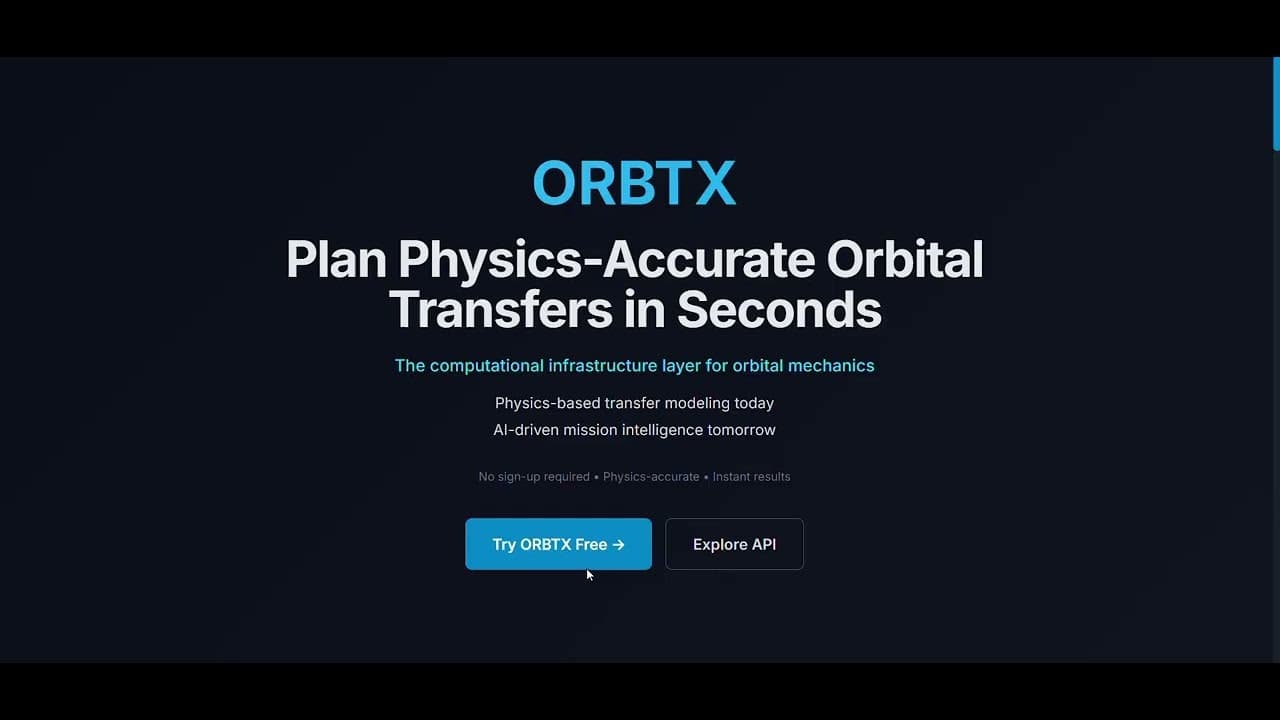
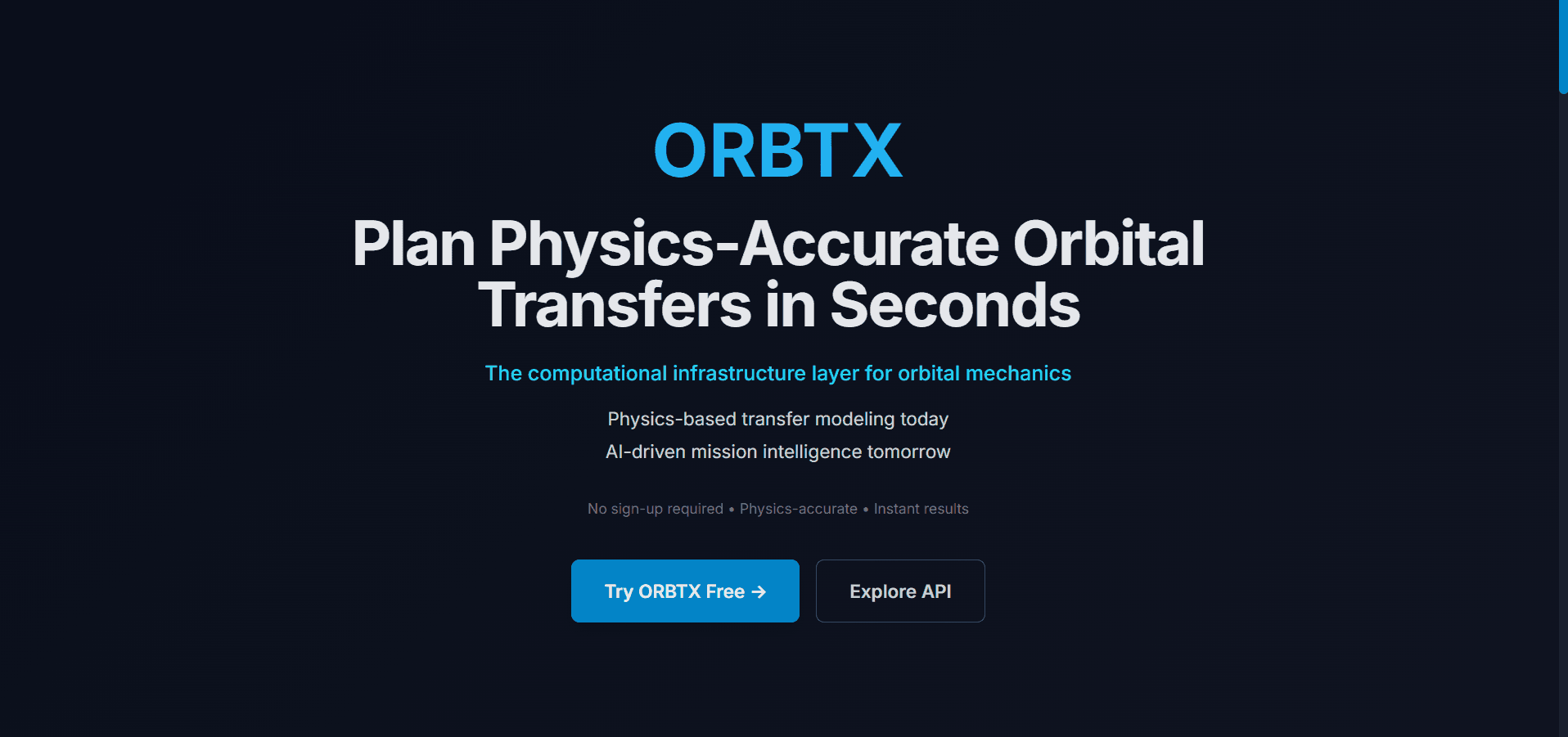
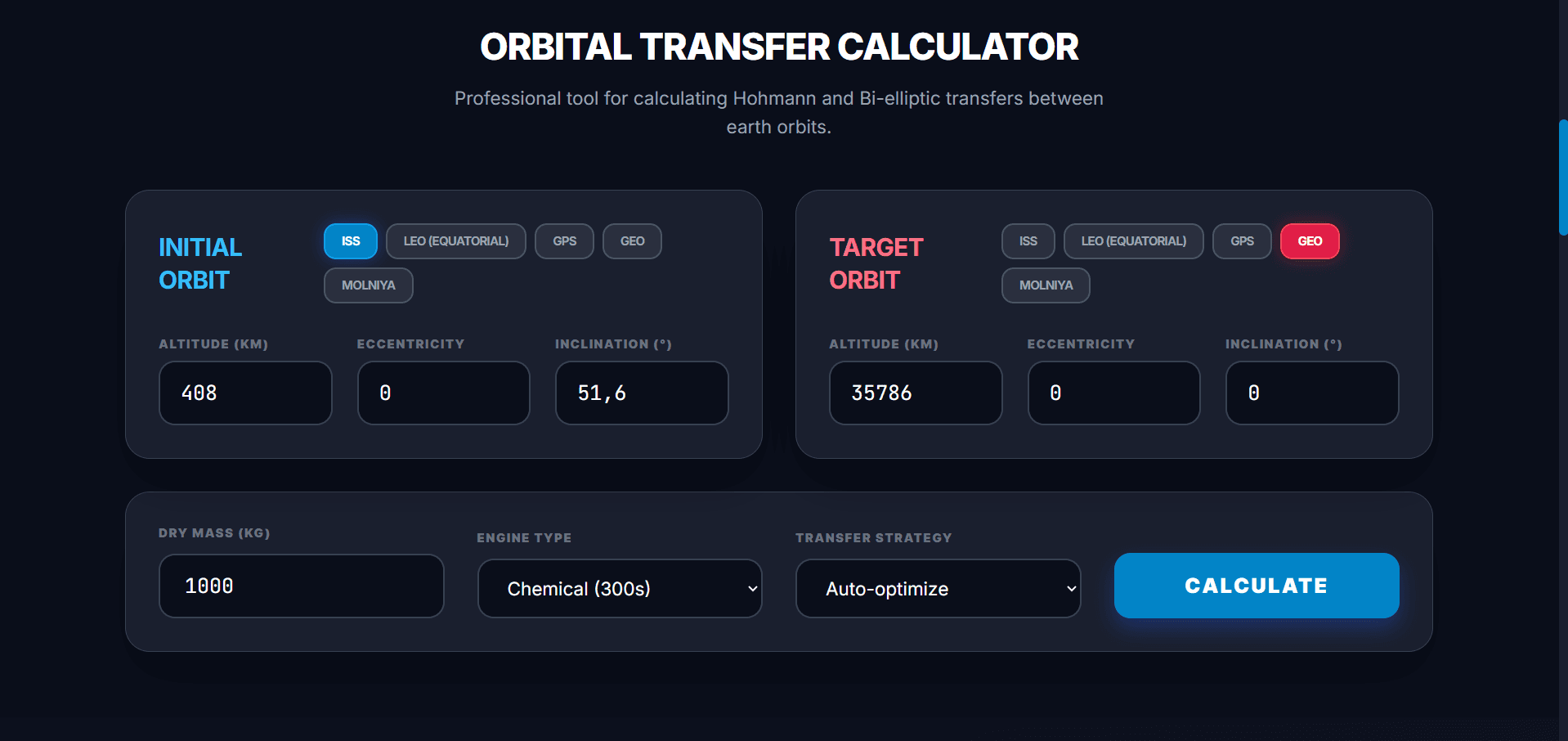
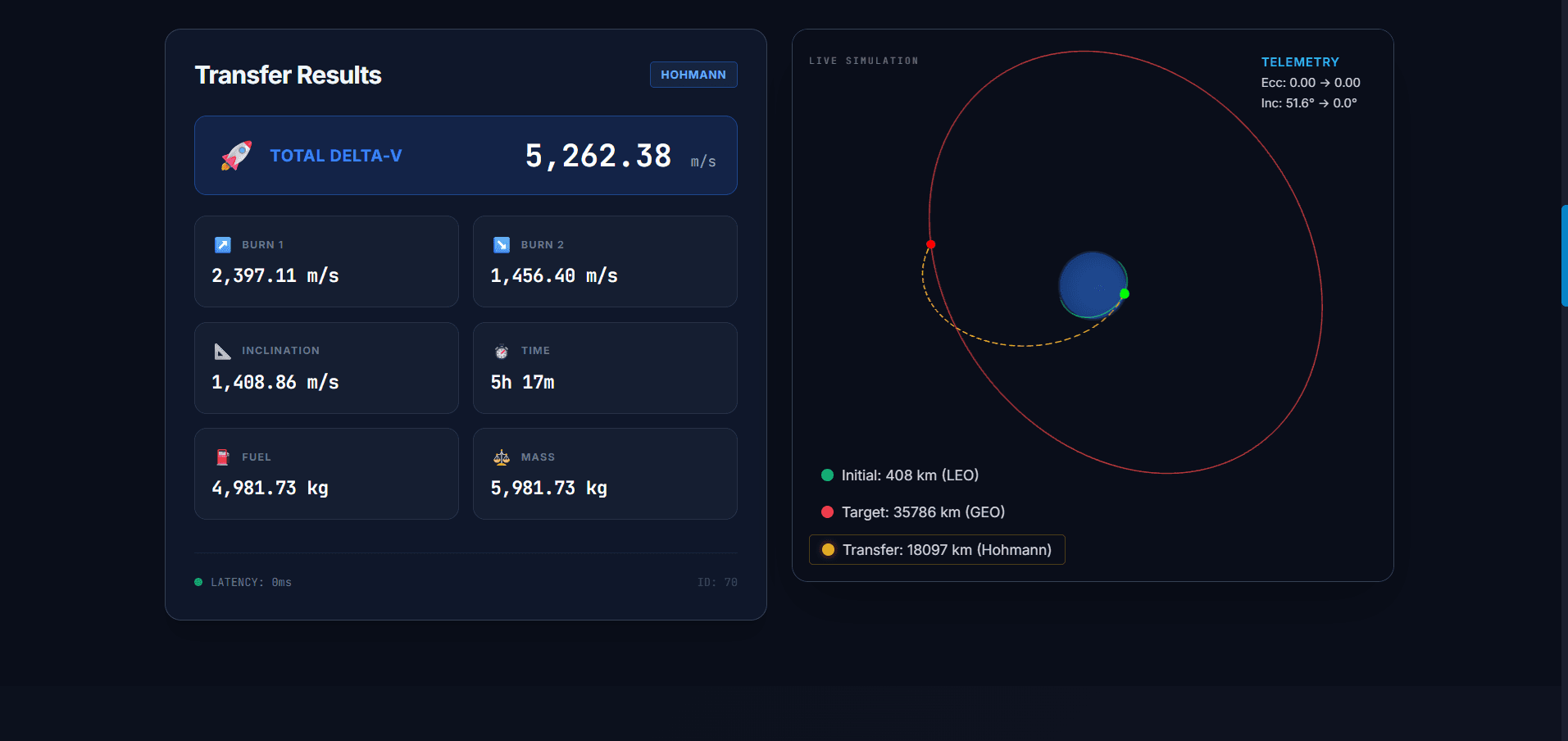
ORBTX is a physics-based orbital transfer engine designed as computational infrastructure for orbital mechanics. It computes Hohmann and bi-elliptic maneuvers, ΔV budgets, transfer time, and visualizes trajectories in real-time 3D - with API-first architecture. Unlike traditional mission software, ORBTX focuses on fast, accessible, developer-ready orbital computation. Today: precise transfer modeling. Tomorrow: AI-driven mission intelligence.see more
Founder
Screenshots
About
Imagine having the power of precise orbital mechanics right at your fingertips, transforming complex astrophysics into actionable, real-time data. That is the promise of ORBTX, a revolutionary physics-based Delta-V engine built from the ground up to serve as the computational backbone for any mission involving orbital maneuvers. We understand that in the world of aerospace and satellite operations, speed and accuracy are not just desirable traits; they are absolute necessities. ORBTX delivers this by offering instant calculations for critical maneuvers like Hohmann and bi-elliptic transfers, ensuring you always have a clear picture of your required Delta-V budgets and the exact time transfers will take. But ORBTX goes beyond simple number crunching; it brings these complex orbital paths to life through stunning, real-time 3D visualization. This immediate visual feedback is invaluable, allowing engineers and mission planners to intuitively grasp trajectory dynamics that were once buried in dense spreadsheets or slow-loading legacy software. It’s designed for the modern developer, featuring an API-first architecture that makes integration seamless, whether you are prototyping a new constellation or managing existing assets.
What truly sets ORBTX apart is its commitment to accessibility and future-proofing. While today it provides rock-solid, precise transfer modeling that surpasses many established tools in responsiveness, its vision extends much further. We are laying the groundwork for the next generation of space operations, where ORBTX will evolve into a hub for AI-driven mission intelligence. Think about the possibilities: automated optimization based on dynamic constraints, predictive path correction, and mission planning that learns and adapts in ways traditional software simply cannot. By focusing on clean, developer-ready computation now, we ensure that when the future of autonomous space management arrives, you already have the foundational infrastructure in place to leverage it. This isn't just another piece of software; it's the essential toolkit for anyone serious about pushing the boundaries of what is achievable in orbit, offering the speed and clarity needed to turn ambitious concepts into successful missions.
For software engineers, data scientists, and aerospace professionals alike, ORBTX translates complex physics into elegant, usable code. It removes the friction traditionally associated with high-fidelity orbital simulation, allowing your team to spend less time wrestling with outdated interfaces and more time innovating. Whether you are validating a complex gravity assist sequence or simply need a reliable, fast way to budget fuel for a small satellite deployment, ORBTX provides the trusted computational engine you need. It is the bridge between theoretical orbital mechanics and practical, rapid deployment in the increasingly crowded and dynamic space environment.